Activity Type:
In this activity, students will familiarize themselves with the distinguishing physical characteristics of an insect. Students will observe and maintain live crickets to learn the function of various body parts of a cricket. Further, students will have the opportunity to change their negative feelings or thoughts about insects by observing cricket behavior, collecting data and taking care of crickets for one week.
Grade Level: 6 – 8
Subject Matter: Life Sciences
National Standards: NS.5-8.1, NS.5-8.3
[attach bedbugs]
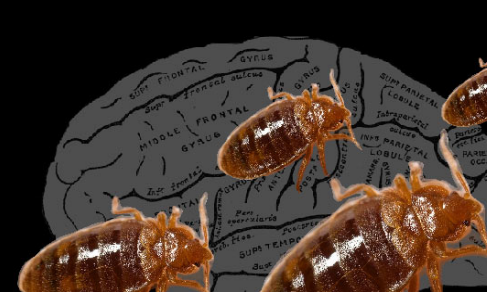
With daily reports of bedbugs in movie theaters, clothing stores, let alone apartment buildings, bedbug hysteria seems to be reaching new heights. Psychologist Kevin Ochsner, of Columbia University, studies how people regulate emotion. He says “reappraising” a situation–for example, thinking about a bedbug in a new way–can help you get your fears under control.
According to this Science Friday video, it is believed that certain parts of the brain have been “programmed” to act with disgust toward certain organisms. Many psychologists attempt to desensitize people with certain phobias by exposing them to the stimulus of their fears. One such fear is that of insects. By gaining hands-on experience and familiarizing oneself with insects, people may be able to overcome the fears they have of these intriguing animals.
Activity Materials
Images of various “bugs” such as spiders, centipedes, flies, etc. (must include several insect images)
1 – 2 dozen live crickets (available from most pet stores)
Cricket habitat (plastic or glass aquarium)
Transparent plastic cups
Plastic food wrap
Rubber bands
Magnifying lenses
Cricket food (available at pet store)
Cotton balls soaked with water
Empty paper towel tubes
Before purchasing the crickets, set-up the cricket habitat by placing cricket food, paper towel tubes and cotton balls soaked with water inside the aquarium. Make sure to have a mesh lid on the tank for proper ventilation. Crickets should be kept in a room that maintains room temperature.
Vocabulary
Insect: A small, usually winged invertebrate with three pairs of legs and three distinct body parts (head-front, thorax-middle and abdomen-back).
Arachnids: a class of animals that includes spiders, scorpions and mites.
Exoskeleton: hard covering on the outside of an insect that provides support and protection.
Spiracles: a tubular system in insects or spiders that allows air to enter and exit the body.
Ovipositor: a tubular organ at the end of the abdomen that is used to deposit eggs.
Cerci: paired appendages at the end of the abdomen that serve as sensory organs.
Compound eyes: eyes that consist of several separate light-sensitive lenses.
Palp: a sensory appendage near the mouth used to assess or manipulate food.
Tympanum: a vibrating membrane in some insects that serves as a hearing organ.
Reappraisal: evaluating a judgment or opinion.
What to Do
Prep: Before you present this lesson, become familiar with the anatomy of a cricket by researching and viewing diagrams or images online or at the library. Teachers TalkingScience recommends that you hand out to your students printed copies of a diagram of the parts of a cricket’s anatomy that are explored in this activity. Or you can draw a sketch, based on your research, on a blackboard.
1. Start the lesson by having students watch the SciFri video, “Psychological Reappraisal of Bedbugs”. Hand out science journals or notebooks and have students write what they know about insects. Students should concentrate on only writing science facts that they think they know about insects such as body parts, what they eat, where they live, etc. Now ask students to write their emotional responses to insects. Do they have any insect phobias? Discuss their responses with the entire class.
2. Hand out the images of various types of bugs. Instruct students to sort the images into two piles one for “insect” and one for “other”. Have students examine and discuss the differences between the images once they have completed sorting. What similarities can be found in the insect pile? What are the differences between an insect and an arachnid? Students should write their explanations in their journal.
3. Ask students to focus on the image of the cricket. In their science journal, have students write observations from the image (body parts) and also how they feel about crickets.
Activity 1: Cricket Anatomy
Prep: Before this activity, prepare the crickets for student observation. Place one cricket inside a clear plastic cup, cover with plastic wrap and secure the plastic wrap with a rubber band. Use a needle to poke small holes for ventilation. Prep enough crickets for each student or for each group of students.
1. Hand out magnifying lenses and crickets to students. Ask students to observe the cricket and explain why a cricket is classified as an insect. Students should write their explanations in their science journals as well as any observations throughout this activity.
2. Have students locate the head of the cricket. This is one of the main body parts of a cricket. What features do they see in the head area? How many sensory organs can they observe?
3. Have students locate the second main body part of the cricket, the thorax. What appendages are connected to the thorax? What function does the thorax perform?
4. Have students locate the third main body part, the abdomen. What physical features can they observe that extend from the back of the abdomen? All crickets will have two short hair-like body parts extending from the back of the abdomen. These are called the cerci. What do they think is the function of the cerci?
5. Ask students if they are able to distinguish a male cricket from a female cricket. Tell students that males and females of any species usually have some type of different body feature from one another. Have students go around the room observing other crickets to see if they can observe any differences that would distinguish a male from a female cricket. If necessary, hint that this distinguishing feature is located in the abdomen area.
6. Have students examine their cricket and raise their hand if their cricket has a long tube-like body part extending from in between the cerci. Tell students that this appendage is called the ovipositor and is only found on the female cricket. What do they think is the function of the ovipositor?
7. After completing observations and journal entries, have students carefully place their crickets back into the cricket habitat.
Activity 2 – Cricket Care
1. Create a classroom chart that assigns groups of students to make daily observations and care of the crickets for the next week. Besides feeding and watering the crickets, students should also make observations at regular intervals four or more times per day on the chart. Students can determine what type of data should be collected or select from the following list:
- Are crickets chirping?
- Are crickets eating?
- Are crickets drinking?
- Are crickets interacting with each other?
- Number of females alive.
- Number of males alive.
- Number of crickets jumping.
- Number of crickets sitting still.
- Number of crickets hiding in tubes.
2. After one week of caring and observing for the crickets, have students review and discuss the results from their chart. Were the crickets chirping at a certain time during the day? How many times a day did they eat? What conclusions can they state based on the data collected?
3. Discuss with students how they feel about crickets after caring for them compared to their initial feelings at the start of the activity. Did any of their feelings towards crickets change? Do they think that by taking care of the crickets they “reappraised” their negative feelings towards crickets?
What’s Happening?
An insect is an animal with particular characteristics. Two distinctive features of an insect are that it has three main body parts (head, thorax and abdomen) and three pairs of legs. Besides these features, crickets also have other common insect characteristics including antennae, an exoskeleton and two pairs of wings.
The cricket’s head contains the antennae, compound eyes and palps or mouthparts. The antennae are very sensitive and are used for smelling and touching. The compound eyes are made up of multiple lenses, which enable the cricket to detect motion easily and thus escape predators. The palps consist of movable mouthparts used for crushing and chewing food.
The cricket’s thorax contains the muscles that enable movement for the attached wings and legs. Besides using its wings for flight, a male cricket with also use its wings to create a chirping sound that acts as a mating call. The legs also serve a double purpose since they contain the auditory organs called the tympanum.
The cricket’s abdomen contains the heart, spiracles for breathing, digestive system and reproductive organs. Two short hair-like structures (cerci) that extend from the back of the abdomen are used for sensing movement to detect predators. Females have a long tube like structure between the cerci called the ovipositor for depositing fertilized eggs.
Although crickets are relatively harmless to humans, they may be viewed in a fearful or negative way. In this activity, students have the opportunity of reappraising these innate instincts by becoming more knowledgeable on how to care for this particular insect.
Topics for Science Class Discussion
- Why do crickets have so many sensory organs?
- How is a crickets anatomy different than that of a human or another animal?
- What are other physical differences between male and female crickets?
- Explain the relationship of crickets in the food chain.
- What are some physical features on a cricket that assists in its survival?
Extended Activities
Raise and breed crickets as a classroom project so that students can observe the life cycle of a cricket. Students can research methods to maintain long-term cricket habitats and track the stage of a cricket’s life cycle.
Conduct a cricket jumping experiment. Compare how far a cricket can jump to the length of a cricket’s body or to how far a human can jump. Have students make predictions, collect data and create a graph that demonstrates the relationship between each comparison.
Make video recordings of the crickets as they are chirping or eating. Playback the videos in slow motion and observe how the sounds are made or how the cricket uses its mouthparts to eat.
Try this experiment to determine if a crickets chirp can be use to predict outdoor temperature:
http://www.sciencebuddies.org/science-fair-projects/project_ideas/Zoo_p055.shtml
Explore Pest World For Kids website for interactive games, lesson plans and information on animals that are considered to be pests:
http://www.pestworldforkids.org/index.html
Reappraise your opinion on roaches through interactive games and activities:
http://yucky.discovery.com/flash/roaches/
This lesson plan was created by the New York Hall of Science in collaboration with Science Friday as part of Teachers Talking Science, an online resource for teachers, homeschoolers, and parents to produce free materials based on very popular SciFri Videos to help in the classroom or around the kitchen table.

The New York Hall of Science is a science museum located in the New York City borough of Queens. NYSCI is New York City's only hands-on science and technology center, with more than 400 hands-on exhibits explore biology, chemistry, and physics.